
Josefa Valdés had spent years teaching fitness classes in Querétaro when a new interest changed the direction of the business she was building.
During the pandemic, with her studios closed, she began exploring facial exercise and facial-massage routines as part of her interest in skincare. She saw an opportunity to share approachable Spanish-language content about those practices.
She started posting on Instagram: first videos, then a free live class every Thursday at 8 p.m. Anyone could join.
At first, her mother and cousin watched. Then hundreds of people, then thousands. A year and a half later, Jueves de Marea had grown beyond what Jo originally imagined.
Josefa joined Getmore's July webinar with the same directness she brings to her community. She shared the story behind Marea Skin, including the decisions that worked and the mistakes that cost time and money.
Community came before the product
Jo is clear about why the model worked for her. She does not see authenticity as a tactic that can simply be copied into a marketing plan.
Her projects reflect her personality and convictions. Followers recognize that consistency across her classes, content, and conversations. Trust developed because she kept showing up with a clear point of view.
The live-class format was deliberate. Years of teaching cycling classes had shown her that the value was not only the workout; it was the connection between people in the room. Livestreams felt like the closest digital equivalent.
Jo also invited participants to share their experiences and progress photos. She described those customer stories and recommendations as important to the community's growth. They are accounts shared by participants, not evidence of a guaranteed skincare outcome.
Criticism arrived along with the wider audience. Jo remembered reading Russell Brunson's view that negative comments can be a sign of reaching beyond your immediate circle. Seeing comments from people she did not know made the scale of the audience feel more real.
Her response was to stay consistent with what she believed and focus on the people who connected with it, rather than trying to please every person who encountered a post.
How the community showed her what to launch
Marea Skin grew out of customer messages rather than a product-planning workshop.
Club Marea members began asking which oils Jo used during classes. By then, the brand had something difficult to reproduce quickly: trust built through weekly participation, questions, and a recognizable teaching style.
The first product was simple almond oil, purchased already packaged. She did not need an elaborate product range to learn whether customers wanted to buy. The same logic applied to paid digital content: people who valued the free classes already understood the potential value of a deeper offering.
Two lines developed together: physical products and a digital membership. Jo described Club Marea as a beauty-content library, with classes and routines organized by focus area, length, and goal.
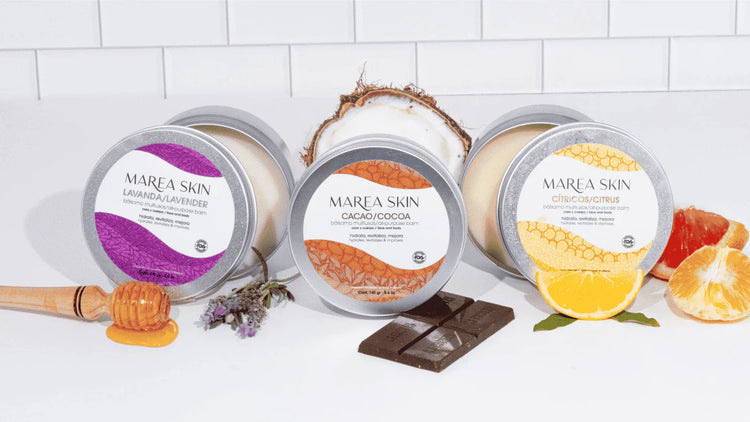
Marea Skin's positioning pairs products with education about how to use them. In a crowded skincare category, the ongoing routine and teaching relationship are part of the customer experience, beyond the formula alone.
The partnership behind Marea: Jo and Luciano
At the center of Marea are Josefa and her younger brother Luciano.
Jo is the public face: classes, videos, and the relationship with the community. Luciano builds the operating side, including the Shopify store, paid-media strategy, and fulfillment. She described their strengths as complementary.
Jo joked that without Luciano's operational counterpart, she could stay focused on the community and leave the infrastructure unresolved.
During the pandemic, Luciano told her about selling Japanese knives online without physically handling them. She was not yet familiar with dropshipping, but she recognized that he understood how to sell products online. That was enough to start discussing a business together.
At the time of the interview, the full team consisted of five people, including the two siblings. Having previously managed a larger team, they had learned to focus on what each role contributes rather than headcount as a sign of growth.
Mistakes worth sharing
Jo spoke openly about the decisions that did not work.
Hiring too quickly
During an optimistic period, the business added too many people and a larger office. In quieter seasons, the payroll placed pressure on the operation, eventually leading to cuts.
She emphasized the human consequence: a hiring mistake is not something a business can resolve with a quick apology. Someone's livelihood is involved.
Her lesson was to hire based on demonstrated demand and the work that needs doing, not only on what the business hopes will happen.
Building a custom app too early
Club Marea initially used existing platforms. Wanting a more customized experience, the team hired developers in India to build its own app. Language and time-zone differences complicated the project, costs rose, and the finished experience made it difficult for customers to access their classes.
Jo's takeaway was that members needed the content to work reliably. Interface details mattered less than being able to open the class they had paid for.
The business returned to an established platform and, at the interview, had no plans to replace it. In hindsight, the resources spent building custom technology could have supported the content and customer experience that drove the business.
Where the business stood in July 2026
Marea Skin grew organically for several years through classes, content, and its community.
The team later added paid media under Luciano's direction. Jo reported producing around 50 ad videos per month alongside organic content. The approach is to identify ideas that resonate organically, then develop them further for paid distribution.
Meta remained an important channel. In July 2026, the team also began experimenting with TikTok Shop Live. Jo was struck by the audience's willingness to engage with products in a live shopping environment.
She compared nine people watching a live session with nine customers visiting a physical store at the same time: a small audience can still create meaningful conversations.
The July goal was to learn which days, times, and formats worked, then use that evidence to prepare for the year-end season. For Marea, that planning starts in August.
Frequently asked questions
How do you build a community before launching a product?
Show up consistently with something useful before asking people to buy. Josefa taught free weekly classes for more than a year, building a relationship before introducing products. Customer questions then helped identify demand. The lesson is to listen for a real need, not to assume a large follower count automatically creates buyers.
How can a skincare brand stand out in a crowded market?
Connect a clear product offer with an experience customers value: education, helpful routines, relevant service, and a consistent voice. Marea Skin built that relationship around classes and community. Getmore helps beauty brands express their differentiation through Shopify design, product information, and conversion-focused buying journeys.
When should an ecommerce brand invest in paid advertising?
First check that the offer resonates, inventory can support demand, and the store gives visitors the information they need to buy. Then test paid acquisition with clear margin and conversion targets. Scaling traffic into a weak storefront or unreliable operation can create expensive disappointment rather than durable growth.
What is a digital membership, and how does it create recurring revenue?
A digital membership charges for continued access to content, classes, routines, or resources. Club Marea uses that model alongside physical products. It can diversify revenue, but retention depends on continued value and participation; recurring billing alone does not guarantee predictable profit.
How large a team does an ecommerce brand need to scale?
The right size depends on volume, complexity, and the work that cannot be automated or handled reliably by partners. Marea described operating with five people after learning that a larger payroll was not always better. Hire against current responsibilities and sustainable cash flow, with a clear owner for each critical function.
Is TikTok Shop worth testing for a brand selling in Mexico?
It can offer a new way to demonstrate products and answer questions live. Marea's July 2026 experience was an early experiment, not proof of long-term profitability. Compare current fees, fulfillment requirements, customer access, and contribution margin with your other channels before scaling. Keep the role of your own Shopify store clear within the wider strategy.
Want more lessons from real Shopify brands?
- Hermanos Koumori: decisions behind an online and physical retail brand
- Case study: how Tueste Café grew sales sevenfold in six months
- Register for an upcoming Getmore webinar
The original webinar video is in Spanish.
Building a beauty brand on Shopify? Getmore can help turn your brand positioning into a stronger shopping experience, with clear product information, conversion-focused design, and an implementation plan that supports growth.
